
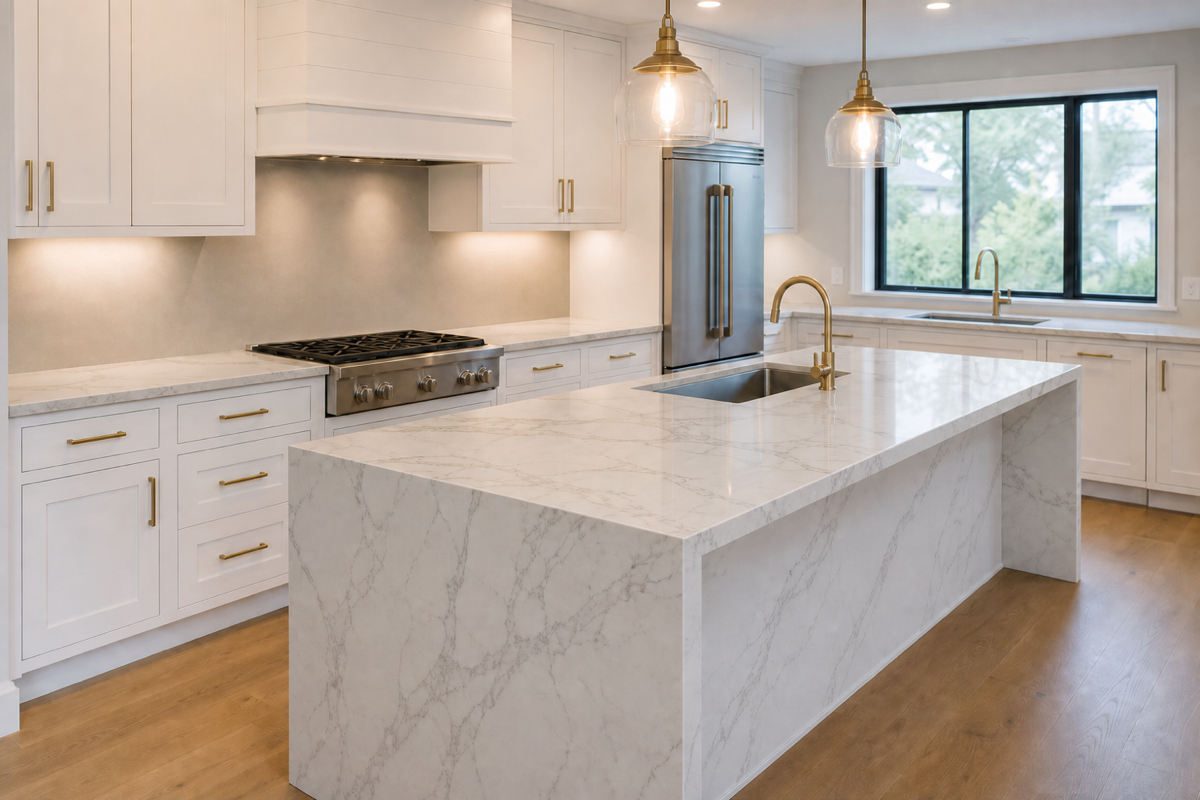
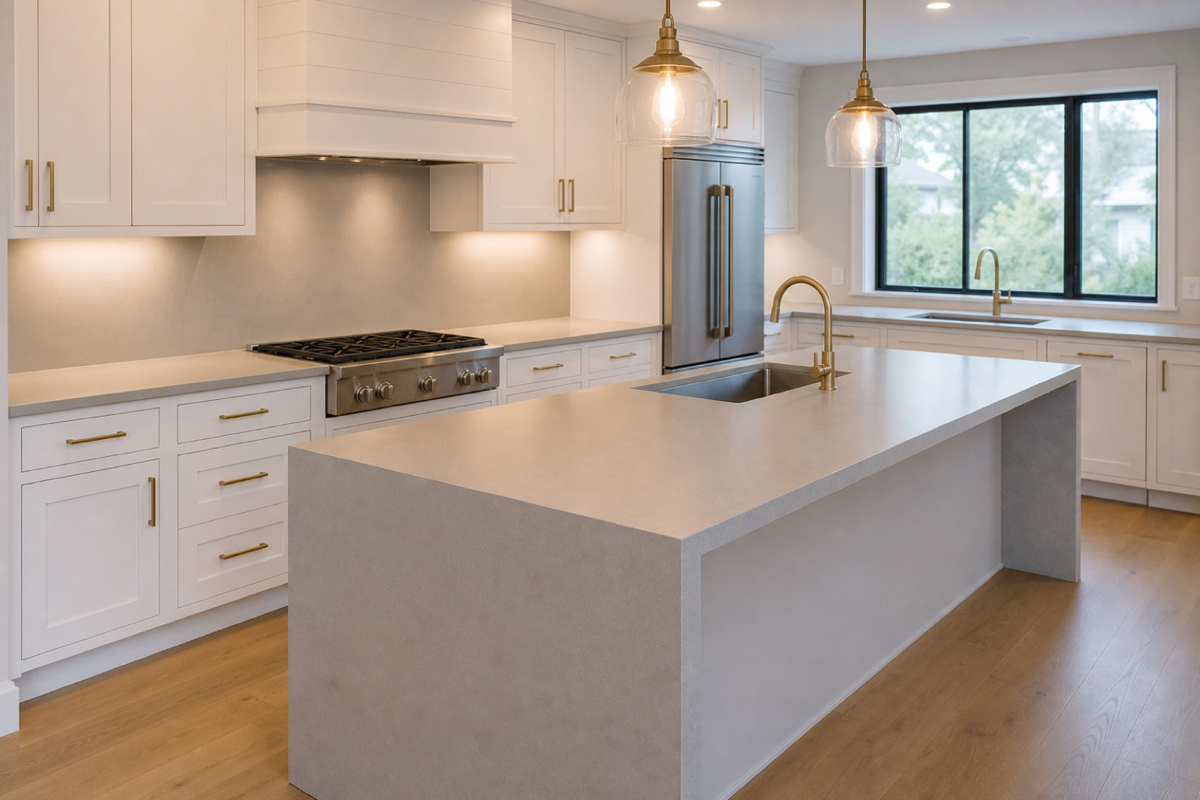
Walk any showroom floor on a busy afternoon and you'll hear the same sentence over and over: "It's beautiful, let me think about it." Nine times out of ten, that customer isn't stalling on price. They can't picture the slab in their own kitchen. The sample looks stunning under your lights, sitting next to a dozen other gorgeous options, but their brain can't transplant it home to their cabinets, their floor, their morning light.
That's the imagination gap. And it quietly costs showrooms more deals than any competitor ever will.
Why samples aren't enough
A hand sample answers one question, "what does this stone look like up close?", but it leaves the important one unanswered: "what will it look like in my space?" Homeowners are making a five-figure decision about a surface they'll live with for twenty years. Uncertainty is the natural, rational response. So they take a photo of the sample, promise to come back, and go home to scroll through Pinterest instead.
Every hour that passes after they leave your floor, the odds of closing drop. The excitement fades. A spouse weighs in. Another showroom sends a follow-up. The sample that felt perfect at 2 p.m. feels like a maybe by dinner.
Show them, don't ask them to imagine
A better sample won't fix this, and neither will a longer sales pitch. What works is taking the guesswork off the table: showing the customer the actual stone on their actual counters before they walk out.
That's what the StoneOS AI Visualizer is for. The customer scans a QR code and snaps a photo of their kitchen (or uploads one they already have, or starts from a preset scene). Within about ten seconds, any stone in your catalog is rendered onto their room, photorealistically, matched to the room's real light.
The conversation changes on the spot. Instead of "I'll think about it," you get "wait, can I see the one with more movement?" At that point you've stopped selling and started helping them decide.
The details that make it believable
A visualizer only closes the gap if the result looks real. A few things matter here:
- Multiple surfaces at once. Countertops, island, and backsplash render together, so the customer sees a coherent kitchen, not one surface floating in isolation.
- Cabinet colors. Swap cabinet finishes from a fixed palette to match what they're planning, so the stone is judged in context.
- Real light. The render respects the room's existing lighting, which is what makes the brain accept it as "my kitchen" instead of a catalog mockup.
When the image looks like a photo of their finished kitchen, doubt evaporates. They stop trying to imagine and start reacting to something real.
Let the decision travel home, without the price war
Not every customer buys on the spot, and that's fine. The goal is to make sure that when they leave, they leave with the stone top of mind, not a vague memory.
With the visualizer, your team stars the favorites and emails the renders straight to the customer, with no pricing attached. That last part is deliberate. A render of their dream kitchen is emotional and specific. A price list is a negotiation. Sending the images without numbers keeps the customer anchored on the vision, and keeps the pricing conversation where it belongs: with you.
Now the customer goes home and shows their partner an actual picture of their kitchen with the new stone in it. That's a very different conversation than "I saw a nice quartz today."
What this does for the floor
Showrooms that close the imagination gap see it in a few places:
- Fewer "let me think about it" exits. The objection loses its power once the customer can see the result.
- Faster decisions. When the whole household can see the same rendered kitchen, the back-and-forth shrinks.
- Higher-confidence sales. Customers who saw the stone in their space are less likely to get buyer's remorse and reverse the order.
None of this requires new hardware or a rebuilt showroom. The visualizer lives right in your StoneOS catalog, launch it from any stone card or from the toolbar, on the same screens your team already uses. It's even available on the floor kiosk and on the phone during on-site visits.
Customers rarely walk out because the stone isn't good enough. They walk out because they can't see it yet. Put the slab in their kitchen before they leave, and "let me think about it" has a way of becoming "let's do it."
You can see the visualizer in action on the StoneOS AI Visualizer page.